The Forest Above the Water: How Your Zipline Ride Protects the Nimboyores Aquifer
Every zipline tour we run crosses something you cannot see from the platforms: water. Beneath the forest floor lies the Nimboyores aquifer, one of the most important groundwater reserves in Guanacaste — and the reason this land will never be cleared.
What is the Nimboyores aquifer?
An aquifer is an underground layer of rock and sediment that stores rainwater. Nimboyores supplies water to communities across this corner of Guanacaste, one of the driest regions of Costa Rica. In a province where every dry season tests the wells, what happens above the water table matters enormously.
Why the forest matters
A standing forest is the aquifer's best infrastructure:
- Canopy shade slows evaporation and keeps the soil alive
- Roots turn hard rain into slow infiltration instead of runoff
- Leaf litter acts as a sponge, feeding water down instead of letting it race to the sea
- No pavement, no clearing means the recharge zone keeps doing its silent work
Cut the forest, and the rain that should refill the aquifer runs off carrying the topsoil with it.
Tourism as a conservation tool
Here is the honest economics of it: land in Guanacaste is under pressure. A forest that generates nothing eventually gets converted. Our family chose a different model — a forest that earns its keep by staying exactly as it is.
Every guest who flies our cables funds:
- The protection of the forest over the recharge zone
- Local jobs that depend on the trees staying up
- A working example that conservation and business can share the same land
The platforms touch a handful of trees. The animals keep their highways. The water keeps its shade.
👉 This is what "your booking makes a difference" actually means here: fly the forest that your visit protects.
What you will see (and hear)
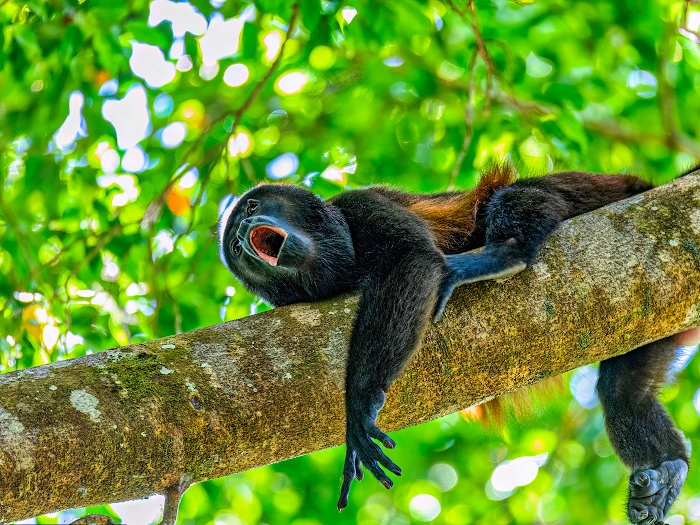
Howler monkeys own the soundtrack — the loudest land animal in the Americas, and our forest is full of them. Depending on the season and the hour you may also spot white-faced capuchins, iguanas, coatis, trogons and motmots — the everyday neighbors of a forest that stays standing. Morning tours see the most action; sunset tours hear the shift change.
Visit like a conservationist
- Choose operators who protect the land they use — ask any company what their forest funds
- Keep noise down between cables; the wildlife stays closer
- Leave nothing, take nothing — the classic rules still work
- Kids learn conservation best hanging from a cable above it — bring them from age 2
Frequently asked questions
Is the tour "eco" or just marketing? Fair question for any operator. Our answer: the forest over the Nimboyores recharge zone stays standing because tours fund it. Come see it — the monkeys are the audit.
Can I visit without ziplining? The canopy tour is how we share this forest — it is also the least invasive way to move people through it: above the ground, on fixed cables, touching a handful of trees.
When is the forest greenest? May to November (green season). The dry season has its own beauty — that is when the guanacaste trees show their architecture.
Fly over it, and you protect it
Ride the Skyline Canopy Tour — or its sunset version — and you are not just crossing a forest; you are one of the reasons it is still there. Book online with free cancellation up to 48 hours, or ask us anything at +506 6012-1414. That is a souvenir that outlasts any photo.
Ready to live it, not just read it?
Ziplines, ATVs, sunset flights and family adventures — all in one protected forest in Guanacaste. Spots sell out in high season.
Book your tour now